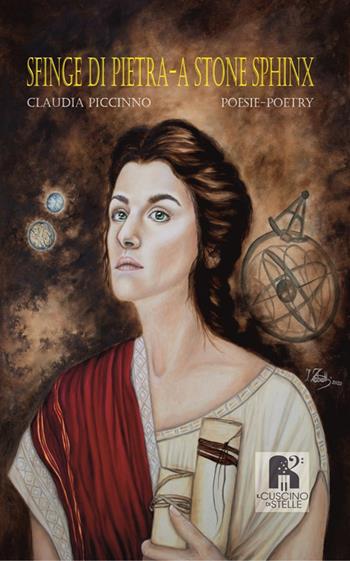
Claudia Piccinno, Sfinge di pietra / A Stone Sphinx, Il Cuscino di stelle, 2020
Gerani alla finestra

Incombe
lo sfarfallio di morte
mentre scorre la vita alla finestra...
Sul davanzale
ancora un geranio.
Resiste alle intemperie
il bucaneve su in montagna
E si domanda l'aquila
perché il cielo è cosi azzurro
pur piovendo lacrime da giorni
su chi scruta le nubi
col naso all'insù.
Creatura della fede
o delirio collettivo
una madre pietosa
ha fatto capolino
per trascinare in salvo
i suoi bambini.
Sia essa scienza, humanitas
O chissà...
Noi gerani alla finestra
proviamo a trarre linfa da questo
lungo inverno.
La primavera è giunta
smarrendo i suoi
colori.


Geranium at the windows

Incumbent was
the flicker of death
while life flew through the window...
On the windowsill
one more geranium.
Withstands bad weather
the snowdrop high in the mountains
And the eagle wonders
why the sky is so blue
despite it was raining tears for days
on who scrutinizes the clouds
with upturned nose.
Creature of faith
or collective delusion
a pitiful mother
peeped
to drag safely
her children.
Be it science, humanitas
Or who knows...
We geraniums at the window
let's try to draw sap from this
long winter.
Spring has come
losing his
colors.


Rassegnazione a km 0

Si spuntò il corno
che mi donasti.
L'ho ritrovato
nel fondo di una borsa
Mi porterà fortuna?
Dimmi...
Ritornerai?
Rassegnazione a km 0
Querelle inutile tra cuore e ragione.
Il tempo è trascorso invano,
nulla è cambiato.
Neanche il dolore
ti ha ricordato il mio nome,
o forse semplicemente
lo hai depennato
sostituito
profanato.
Verrà il giorno dei ricordi
ritroverai quel corno gemello
saranno vuote le tue mani
che un tempo stringevano le mie.


Assignment to km 0

The horn
that you gave me,
blew.
I found it
in the bottom of a bag
Will it bring me luck?
Tell me...
Will you come back?
Assignment to km 0
Useless quarrels between heart and reason.
Time has passed in vain,
nothing has changed.
Not even pain
reminded you of my name,
or maybe simply
you crossed it out
you replaced it
you profaned it.
The day of memories will come
you will find that twin horn
and your hands
that once held mine
they will be empty.


Mi sono persa dietro la paura

Mi sono persa dietro la paura,
non una pietra miliare
a darmi il senso di marcia.
Ho atteso al crocevia
che tu tornassi indietro
candidamente
coi tuoi dubbi
e i tuoi perché.
Guardavo ai lati
della carreggiata
in cerca di un viottolo
o una scorciatoia.
Nulla mi ha condotto
al traguardo,
nessuno mi ha preso
per mano,
ogni mio passo
segue le regole
del buon cammino,
accordarsi
agli altri
come crine al violino
e attendere la vibrazione
giusta, il suono di un battito
che mi riporti a casa.


I got lost in fear

I got lost in fear
not a milestone
to show me the direction of travel.
I waited at the crossroads
that you go back
candidly
with your doubts
and your reasons.
I looked to the sides
of the roadway
looking for a path
or a shortcut.
Nothing led me
to the arrival point,
nobody took me
by hand,
each of my steps
follow the rules
of the good way,
make arrangements
to the others
like violin's horsehair
and wait for the right vibration
the sound of a beat
that will take me home.


XVIII

Due timbri in più sul mio passaporto
Una lunga tela tessuta tra le nuvole
collega l'oriente e l'occidente
dentro un verso.
Ho lasciato le ciabatte
e lo spazzolino da denti
come incipit di un mio ennesimo ritorno.
Ho conosciuto gli amici degli amici
e ho invitato i miei a seguire le mie orme.
L' ambasciatrice ha grandi orizzonti da
attraversare,
non la ferma la meschina piccolezza umana.
Non ha altro credo se non quello di una babele
condivisa
dove i bambini crescono insieme
e dove nessun Dio ha il potere di distruggere
quanto la natura umana persegue senza
tornaconto.
Fermiamo il potere schiavo delle leggi
economiche;
fermiamo chi alimenta i pregiudizi
per evitare le sinergie dal basso.
In Turchia ci sono uomini che cedono il posto
alle donne
in un'affollatissima metropolitana.
Ci sono negozianti che sfamano i gatti
a ogni angolo di strada,
ci sono le contraddizioni dei due mondi
e una ferrea volontà di conciliarle.


XVIII

Two more stamps on my passport
A long canvas woven in the clouds
connects the east and the west
inside a verse.
I left my slippers
and the toothbrush
as an incipit of my umpteenth return.
I met friends of friends
and I invited mine to follow in my footsteps.
The ambassador has great horizons to cross,
petty human littleness does not stop her.
She has no other belief than that of a shared
babel
where children grow up together
and where no God has the power to destroy
what human nature pursues without gain.
Let's stop the slave power of economic laws;
stop those who feed prejudices
to avoid synergies from below.
In Turkey there are men who give way to
women
in a crowded subway.
There are shopkeepers who feed cats
on every street corner,
there are contradictions of the two worlds
and an iron will to reconcile them.
«Il suo ampio e variegato volume bilingue Sfinge di pietra raccoglie un’ampia scelta di poesie, ciascuna accesa da una luce diversa che illumina le nostre prospettive sulla vita e la morte, l’amore e l’odio, stoltezza e saggezza. Nei suoi versi si fa spazio il coraggio di riconoscere paure sempre più presenti nel poeta di oggi — l’inadeguatezza, l’insicurezza, la mancanza di libertà, l’inautenticità — paure che spesso non si osa affrontare né rendere parola.» Maja Herman Sekulic
“Her varied and far-ranging bilingual volume The Stone Sphinx includes a substantial selection of poems, each poem aflame with a different light cast on our prospects of life and death, love and hate, stupidity and wisdom. Her poetry allows itself to acknowledge the fears of inadequacy, insecurity, lack of freedom and inauthenticity that any poet today encounters more and more but is not always courageous enough to face and express.” Maja Herman Sekulic
“Un dettato che si alimenta di luce, di ironia e di una costante tensione analitica, capace di andare in profondità e di liberarsi del superfluo. La raccolta affronta una pluralità di tematiche, toccando l’esperienza della vita in tutta la sua estensione, senza concessioni o cedimenti. Si caratterizza per una polifonia di registri e di tonalità, inscritta tuttavia entro un impianto stilistico “classico”: classico nel senso più alto del termine, vale a dire fondato su una struttura solida e intimamente lirica.” Abele Longo
“A poetry nourished by light, irony, and by a constant analytic tension, capable of going in depth and shedding the superfluous. The collection addresses a plurality of themes, embracing the experience of life in its full breadth, without concessions or lapses. It is marked by a polyphony of registers and tonalities, yet remains inscribed within a “classical” stylistic framework: classical in the highest sense of the term, that is, grounded in a solid structure and, at the same time, intimately lyrical.” Abele Longo
Bozze di teatro mai recitate, presenti in un mondo di relazioni psicologiche e umorali che fluttuano in un metaforico inverno dell’animo, tracciato nella poesia Mi sono persa dietro alla paura.
In essa l’autrice ‘perde’ la pietra miliare, l’oggetto concreto, il valore raggiunto dalla misurazione -Del tempo? Dello spazio? Del coinvolgimento emotivo? Smarrisce le certezze solari nello scorrere dell’esistenza. Di qui l’attesa in un crocevia, un ‘punto’, un luogo di scelte verso le diramazioni all’infinito. Inevitabile il richiamo di Claudia dell’attesa di chi è portatore di dubbi – l’animo dell’autrice stessa?L’amato? La divinità? Di nuovo sorgono le incertezze, sostanziate dai perché. Interrogativi sulla causa, sull’origine, della verità. È un’ansia interlocutoria dell’autrice con il suo doppio? Di entrambi? Attraverso il proprio sguardo, Claudia, intravede la via di salvezza: un viottolo, una scorciatoia, dove nessuno mi ha preso per mano, e svela il volto del misterioso interlocutore, quello della solitudine, generatrice di paura. Sembra sentenziare quanto il cammino umano si smarrisca attraverso l’incomunicabilità.
Dalla postfazione di Francesca Ribacchi
Drafts of theater never recited, present in a world of psychological and humoral relationships that float in a metaphorical winter of the soul, traced in poetry. I lost myself behind fear. In it, the author ‘loses’ the milestone, the concrete object, the value achieved by measurement – Of time? Of space? Emotional involvement? The solar certainties in the flow of existence are lost. Hence the wait at a crossroads, a ‘point’, a place of choices towards the branches to infinity. Inevitable Claudia’s call of waiting for those who bear doubts -the soul of the author herself? The beloved? Divinity? Again uncertainties arise, substantiated by why. Questions about the cause, the origin, of the truth. Is it an interlocutory anxiety of the author with her double? Of both? Across the own look, Claudia, sees the way to salvation: a path, a shortcut, where no one has taken me by the hand, and reveals the face of the mysterious interlocutor, that of loneliness, generating fear. It seems to pronounce how much the human ourney gets lost through incommunicability.
From Francesca Ribacchi’s Afterword
 NEOBAR